During June 2026, DOAJ celebrates ten years of the Ambassador Programme. In this very special post, Ambassador for West Africa Oluchi Okere reflects on her DOAJ journey to-date.
The DOAJ Ambassador Programme was established to provide the link between the Foundation (DOAJ) and its benefiting community, the global scholarly community. Thus, as an ambassador, DOAJ’s expectations of me are to support open access and best practices in scholarly communication in my region, and to improve awareness of the DOAJ.
I joined as one of DOAJ’s Ambassadors for West Africa in May 2025 after responding to the public call for volunteer Ambassadors. Two other colleagues were inducted and trained with me by a Senior Ambassador and a Community Manager. I started my Ambassador tasks almost immediately at the Institute for Scholarly Publishing in Higher Education, when the DOAJ was invited to participate in their workshop in June 2025.
One year later, I can describe the experience as an Ambassador as rewarding in a more enduring way than extrinsically. From the outset, it was made clear to me that the task was volunteer-based, and no financial benefits were to be expected. My motivation for volunteering was also sought during the interaction with the Community Manager and the Senior Ambassador for Africa – I was motivated by the need to improve the status quo of scholarly systems in my region. Given the scenario at the time, no remuneration was expected, and there was that huge responsibility of creating awareness in a large underrepresented region – I joined the mission with a mix of excitement, optimism and expectation. It was a whole new uncharted path for me. One year into my role – this is a good time to reflect on the journey so far, and how to be more strategic in the new year.
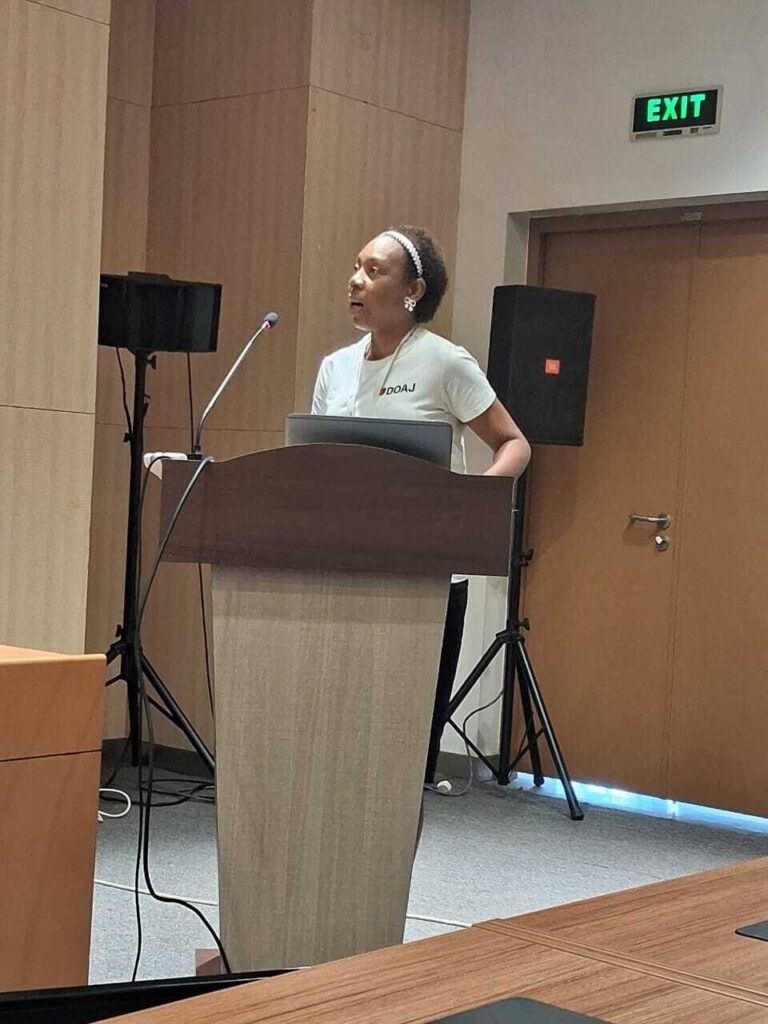
My experience in DOAJ has been interesting and fulfilling in many ways. In this one year, I have attended some industry engagements with collaborators and partners of DOAJ both at home and abroad, in-person and online. I have had several one-on-one consultations on indexing and inclusion requirements of DOAJ and best practices for journal publishing. I am now a member of several communities of practice. With all this, I feel I can do more with some external support and sponsorship for local events, and invitations from community stakeholders. The DOAJ, being non-profit and community-supported, requires continued support from funders to expand their reach for the good of society.
DOAJ has been a fertile ground for my learning. Through my volunteer activities, I have gained an understanding of purpose, process, teamwork and accountability. It has become a journey of self-discovery and knowledge.
Through my interactions with other ambassadors and industry leaders, I now have a better understanding of the scholarly landscape across the world – lived examples, not just theory.
My experience has changed my perception of the strengths, weaknesses, challenges and prospects of scholarly communication in Africa, and particularly in West Africa. I think we have shared struggles across the world in maintaining the integrity of scholarly systems, but Africa’s challenges are somewhat different. This is because our experiences are more biased towards policy and governance failure than unwillingness to comply with best practices.
In Africa, small but incremental progress is being made towards sustainable and trusted open access. Working with DOAJ shows that West Africa is a part of the transformative progress towards a sustainable open access scholarly system. The volume of research and scholarship produced in Africa is phenomenal, but the focus should be on improving the quality of work produced. Additionally, the progress of the scholarship ecosystem in the region should be driven by top-down mandates from government and funding agencies, as is done in most North African countries, in Europe, and South Africa. Collaborative work through National Research and Education Network (NRENs) is key in such a plan, as it requires governance and collaboration to achieve these goals.
On a personal level, I have also enjoyed working with open-minded and driven individuals. Interacting with them has improved my teamwork skills because challenges are tackled as shared responsibility and collective effort. Our regular (monthly) Ambassador meetings are opportunities to reflect on our goals and achievements and seek understanding and help with our work. Sometimes, it is difficult to believe that the majority of the Ambassadors are volunteers with other demanding careers, because of the level of commitment they bring to the table; this is so humbling.
I have also been mentored as an Ambassador – I have improved in my media and digital literacy skills, and self-efficacy. There have been intrinsic rewards. I have improved in my capacity to work independently and as part of a team. The exposure – the opportunity to work with other industry players, ambassadors in EIFL, LIBSENSE e WACREN has provided unparalleled professional growth. DOAJ is community-driven with a social contract that says: open, global e trusted; working with the committed mission-driven individuals who work for DOAJ has taught me accountability and transparency, which have been useful to me in all facets of my existence.
The Self-determination theory posits that individual motivation to provide support to their system comes from three drivers – autonomy, competence and relatedness. Indeed, I have achieved all these intrinsic benefits as a volunteer ambassador with DOAJ in this one year – the freedom to lead initiatives, mentorship that has improved my competence; and relatedness which comes from being part of a team that is focused on making knowledge a common social good.
I have understood that political will and governance have a huge role to play in how our scholarly ecosystem fares in West Africa. I look forward to this new year for more impact in my region. I hope to sharpen my strategies for more reach; I aim to scale from grassroots advocacy to engaging policy makers and institutional leaders in this new volunteering year. Many more happy returns to me!