Putting the OA Journals Toolkit to work in library publishing
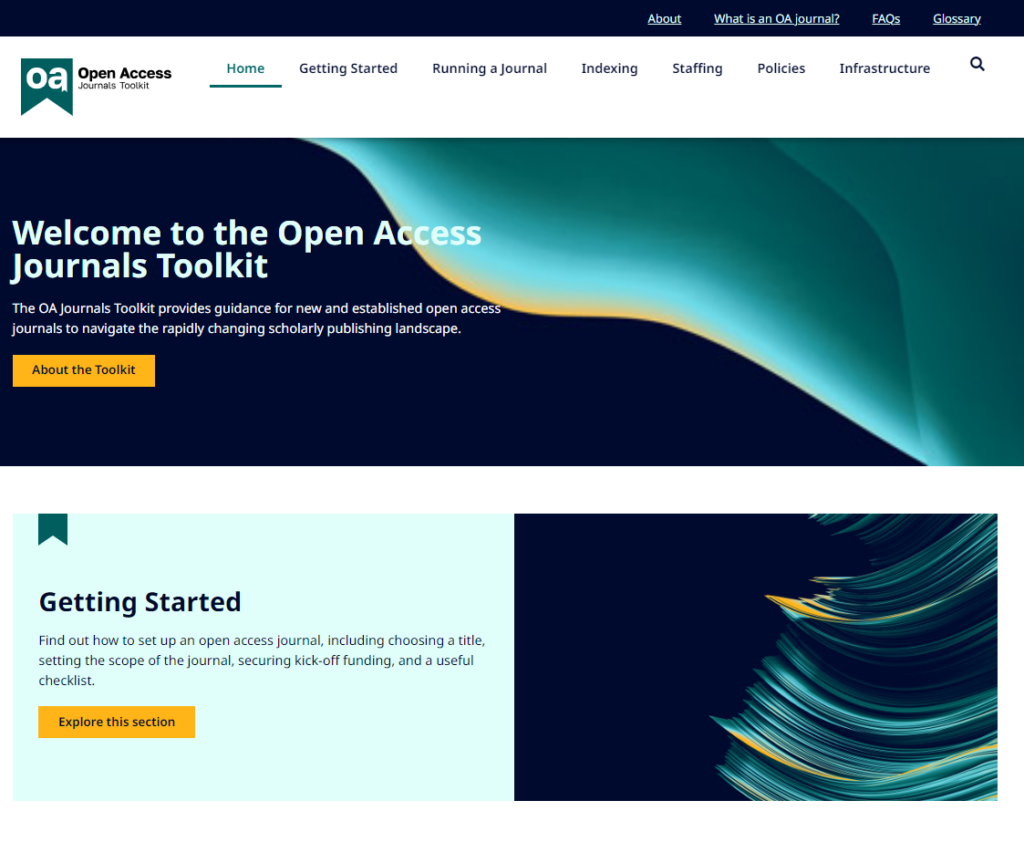
Jules Luck, an Accessibility and Production Specialist at Penn State University Libraries, utilises the OA Journals Toolkit as an essential resource for managing their portfolio of open access journals. Jules highlights the Toolkit’s accessibility remediation section as particularly impactful and discusses the importance of collaborative efforts to build such community-driven open scholarship resources.
Tell us a little about your background
My path to open access publishing was not very straightforward. I was drawn to a career in environmental science until a book I read for class profoundly changed the way I related to the environment. Realizing how much good science communication can change the way we think, I decided to pursue a Master’s of Book Publishing after graduating. I didn’t want to be the one doing the science, but helping tell the story of science, in a way that anyone could access. When I was diagnosed with autism during my first year of grad school, accessibility had already been a way of life. Now, managing a portfolio of open access journals at Penn State, I get to use my experience and passion for sharing knowledge to help make research more equitable, reachable, and accessible to everyone.
How did you find out about the Toolkit?
Open access publishing is important work, but it’s often under-resourced. Supporting it falls on librarians and other scholarly communication professionals who typically contributeignificant time, expertise, and resources to ensure high-quality research can be made openly available. Without the infrastructure and revenue that traditional, commercial publishers have available, open access journals and publishing programs depend on a network of open materials to support the work they do: open platforms, open standards, and freely available tools and resources. In turn, the reliance on shared, open materials creates an ecosystem of mutual benefit for researchers, publishers, and readers alike. Open journals especially benefit from, and even rely on, this ecosystem in order for open research to be possible.
I learned about the OA Journals Toolkit after I was invited to support writing the section “Accessibility Remediation Resources”. As the journals specialist within Penn State University Libraries Open Publishing, a Certified Professional in Accessibility Core Competencies (CPACC), and a disabled person myself, I care about making research more open, available, and usable by all. I was very excited to bring my passion in accessibility and expertise in journal publishing to support the development of this important resource. And since discovering it, it has become one of my most frequently used and shared resources.
How do you use the Toolkit?
I steward a portfolio of 30 (and growing) open access electronic scholarly journals. All the publications we host are free to read, share, download content from, and submit to. Four are print Pennsylvania History journals for which we host the digital archive; six are ceased journals whose archives we maintain; the rest are actively published under a Creative Commons license. Our program provides the infrastructure for journals we support, including persistent identifiers, a platform, technical support, and guidance on the many aspects of starting, maintaining, and growing an open access scholarly journal. This last area is where the OA Journals Toolkit has been indispensable.
I frequently look at several Toolkit sections for information. The “Attracting authors” section has been particularly helpful to share with our newer journals that are just starting to build traction as a publication. Editors of these journals are eager to reach their audiences and receive more submissions but may be unsure how to market themselves. This section has been a great resource to point editors to as a structured way to think about growth and reach, particularly by introducing indexing.
The “Accessibility Remediation Resources” is my most used area of the toolkit. Resources in this section, such as the alt-text guidelines for authors; the Poet Training Tool site; the font, layout, and formatting guidance; and the color contrast tools are all documents and tools that I share frequently with editors. Our program co-created the alt-text guidelines for authors’ resources to help editors shape their journals submission guidelines, and we have used it now to update guideline language for at least two of the journals we support.
What’s your favorite feature of the Toolkit?
It is hard to choose just one feature as my favorite, because the Toolkit has been incredibly useful for our journals program. While the “Accessibility Remediation Resources” is the one section I point editors to the most, I have included several links to different sections of the Toolkit in our in-house journal’s support and style guide and encourage editors to explore it. Having only been in the field of open access publishing for two years now, I have also been glad to learn from the Toolkit myself. As our program has worked to improve the quality of our journals portfolio, I have turned to the Toolkit for resources around discoverability and indexing, ethics, and best practices for journal transparency around focus and scope, history, guidelines, and policies.
Working on the Toolkit allowed me to work with and get to know my colleagues in this field better: Colleen Cressman, Rebel Cummings-Sauls, Amy Harris, Sharla Lair, Jon McGlone, Meg McMahon, and Kate Sheridan—all of whom worked alongside me on creating the accessibility remediation resources section. During our collaboration, I learned about other initiatives and resources that support open, such as Zenodo, the open research repository, and was encouraged to upload contributions there so that they would be persistently available in the Toolkit. I am excited about the prospect of open resources being built by those working in open scholarship for the advancement and growth of open as a concept. The opportunity to support the Toolkit made a lasting impact on me, and I believe it will make a lasting impact on the open journals it serves.
Jules Luck is the Accessibility and Production Specialist within Penn State University Libraries’ Open Publishing program, where they support a portfolio of scholarly journals with production, editorial consultation, and accessibility. They hold a Certified Professional in Accessibility Core Competencies (CPACC) certification and serve on the Library Publishing Coalition’s Board. Jules believes in ensuring that everyone has access to knowledge and ideas that inspire, challenge, and connect us.
To provide the best experiences, we use technologies like cookies to store and/or access device information. Consenting to these technologies will allow us to provide you with the best experience on our blog. Not consenting or withdrawing consent, may adversely affect certain features and functions. Check how we store your information by clicking on the Privacy Statement below.
Functional
Always active
The technical storage or access is strictly necessary for the legitimate purpose of enabling the use of a specific service explicitly requested by the subscriber or user, or for the sole purpose of carrying out the transmission of a communication over an electronic communications network.
Preferences
The technical storage or access is necessary for the legitimate purpose of storing preferences that are not requested by the subscriber or user.
Statistics
The technical storage or access that is used exclusively for statistical purposes.The technical storage or access that is used exclusively for anonymous statistical purposes. Without a subpoena, voluntary compliance on the part of your Internet Service Provider, or additional records from a third party, information stored or retrieved for this purpose alone cannot usually be used to identify you.
Marketing
The technical storage or access is required to create user profiles to send advertising, or to track the user on a website or across several websites for similar marketing purposes.