The story behind the journal: Namibian Journal of Linguistics, Literature and Communication Studies (NJLLCS)
The first journal from Namibia (Southern Africa) was indexed in DOAJ this year. The Namibian Journal of Linguistics, Literature and Communication Studies (NJLLCS) is a Diamond open access publication, andwe were pleased to interview Editor-in-chief Professor Haileleul Woldemariam and Accreditation Manager and Site Administrator Stephen Visagie, from Namibia University of Science & Technology, for this journal story.
Tell us about the journal
Professor Haileleul Woldemariam: The journal began in 2007 as the NAWA Journal of Language and Communication, published by the Department of Communication. In those days the university was known as the Polytechnic of Namibia. For quite a number of years, it was indexed by EBSCO and was in a print form and then online form for several years.
It was recently rebranded as the Namibian Journal of Linguistics, Literature and Communication Studies to better reflect its expanded scope across linguistics, literature and communication studies, while emphasising its national and original identity. The journal moved to the OJS platform in 2023, so that was a historical moment for us. The journal has been publishing for nearly 19 years in Namibia.
Stephen Visagie: As a librarian, you can imagine I’m very pro-open access and previously the journal was behind a paywall. Print editions are great, but not everyone can get to the library all the time, and we’ve got campuses all over the country, so it just seemed like a good thing (to go online and open).
The journal editorial team had been struggling with workload, and on top of it, it was the time of COVID. The University of Cape Town Libraries came to Windhoek, Namibia to do a workshop for institutions and for people with journals in the country. They introduced us to the OJS/PKP journal platform, and told us about their own journals that were online and free. They were also working on something called the African Platform for Open Scholarship, where they were offering a hosting service for universities in Southern Africa that did not have the staffing or technical ability to host on their own. They provided us with the hosting on the UCT servers and gave us a lot of guidance on migrating our journal to online.
How has the move to the OJS platform been?
Professor Haileleul Woldemariam:Now a lot of tasks have become less difficult, because, for example, the system allows you to notify reviewers, allows reviewers to upload. So as a chief editor, for instance, it was my role to write everyone an email to review. And then I would collect the review report and send it to the article contributor. It was a time consuming exercise. Review tools are also integrated as part of the platform, so we don’t have to send another review template to reviewers. It has definitely reduced the number of hours it used to take us.
Stephen Visagie: Also, if everything was done manually and an editor left the journal, then you had to scramble to try and find where the workflows of the manuscripts were at. Now everything is centrally located and recorded in OJS. And then of course, there are all the additional advantages of modern publishing, and we can now start adding things like DOIs to our articles and the metadata gets our articles out there far more efficiently.
In terms of the difference that your journal makes in that discipline area, have you noticed anything has changed now that it is open access?
Professor Haileleul Woldemariam:Obviously, yes. We collect empirical research articles in which different authors discuss critical theory, pedagogical innovations in language and communication areas of research. The journal reaches a large number of readers now including curriculum developers, language policy makers, researchers, students, and then teachers from all over. Also, the general public can access research related to language rights, media related issues, cultural diversity and technology and all that. So we are contributing to policy, policy discussions, and policy development. It’s a different kind of technology transfer these days, because we have, for example, linguistic AI, which has not been known for years here in the African context. We are reaching a larger number of readers because the journal is now open access. So everyone has free access. Previously we used to print and would then send copies to the schools and universities.
We also have a number of our PhD students in our department who didn’t have open access to articles. Publications from the Global South are accessible now. We are promoting open access, we are promoting language and linguistics research and now we have a wider coverage.
Stephen Visagie: It’s fascinating to see where our submissions are coming from – from Ethiopia to Malawi to Zimbabwe to Nigeria. It’s a truly continental journal if you look at where our submissions are coming from now.
Why do you think DOAJ is important to the scholarly community?
Professor Haileleul Woldemariam:DOAJ is essential for advancing equity and inclusion, knowledge creation, knowledge production, knowledge circulation, especially in the Global South. Open access removes paywalls that limit access for students, and practitioners who cannot afford expensive subscriptions. DOAJ has increased the impact of our work because it’s easily accessible.
DOAJ is also a key quality control as well as a discovery infrastructure. It is a quality control measure in our blind peer review processes. These processes are now very easy. And then you have that discovery infrastructure. We have more visibility. DOAJ evaluates journals for rigorous peer review, editorial standards, transparency, and it helps researchers to discover which journal is accredited and which journal may be a predatory kind of journal. We are very proud that we are indexed.
Also, DOAJ is now a kind of de facto requirement in Africa. If you are in DOAJ, that means that you are accredited. You are trusted by readers. You are trusted by policy makers. I can proudly say that I’m editing an open access journal. So, therefore, DOAJ has given us credibility. In some African countries, including Namibia, there is no institution to accredit these journals. In Namibia there are 17 journals and we are the first journal to be indexed by DOAJand I feel like we have joined the international community through DOAJ.
Stephen Visagie:There is value to being included by DOAJ. It’s adding that trust element. At our library we get asked to check publications for potential places to submit manuscripts, and it’s shocking how many of these conferences or journals are predatory. Everyone is always very unsure. So, many of our staff are caught between not wanting to publish in a predatory or low quality journal, but having to publish in an expensive journal with a huge APC that, with our exchange rate, is almost impossible to afford. Being included in the DOAJ is really going to help us with that sense of trustworthiness.
An issue for Diamond open access journals like yours is sustainability – how is your journal supported?
Stephen Visagie: It is difficult. Luckily, we do have support. Some funding support derives from the university, and they allow us to use our work hours to work on the journal. But it can sometimes be difficult to find funding immediately if you want copy editing done. These are normally the reasons that if we do publish a little bit late, it’s not because we weren’t ready, it’s because we couldn’t access immediate funding to get the job done. The support we got from the University of Cape Town Libraries was dependent on us remaining a Diamond journal, because that’s their philosophy as well. There are also other costs – for example, we’ve become the first university in Namibia to become an organisational member of ORCID. Sometimes you want to add another thing and then it’s like, no, you have to wait until next year’s budget.
Is there anything that you think DOAJ should consider or could do in the future to help journals like yours indexed?
Professor Haileleul Woldemariam:DOAJ could strengthen support for Southern African journals through capacity building. In the university system, you are already loaded with a large number of PhD students, MA students in the discipline and the teaching load is heavy. So we have that capacity problem and that is a challenge for many of us. We had a workshop last year where we met Ina Smith from DOAJ. More capacity building workshops for the other Namibia journals would be ideal.
We also need capacity building in technology transfer kind of workshops. It would also be good to understand how to deal with AI in publishing, we should have that kind of integrated approach, technology enhanced method of, you know, checking quality. And the other important things, research ethics, that is very important. We are publishing because we are contributing to policy, language policy, multilingualism, different methods of teaching, technology transfer and all that. So, obviously, we have to meet that quality standard, ethics, and then the larger community needs that kind of ongoing support.
Stephen Visagie: Now that we’ve got our first DOAJ journal in Namibia, we are building some capacity and we can start a network, because previously we had to rely on a lot of help from South Africa. They were coming up for workshops or we were meeting them online. Now we can slowly start building our own Namibian support network.
We also have the advantage here, being a university, that we’ve got a library that can support the journal. Whereas some of our journals in Namibia are from small research institutions. So, they don’t have librarians that understand the value of metadata integration and DOIs and all those sorts of things that we have to do in the background. They’re missing that support aspect. We’re just very grateful for the assistance and for DOAJ helping us through the process.
Acknowledgments
The NJLLCS journal is grateful for the guidance and help received from others, including Reggie Raju, Jill Claassen, and the rest of the Scholarly Communication & Research team at the University of Cape Town. A big thanks as well to Ina Smith from the Academy of Science in South Africa (and DOAJ Community Manager for Southern Africa) for her invaluable advice in preparation for the DOAJ indexing. The journal success is representative of the library community and the people who form part of it.
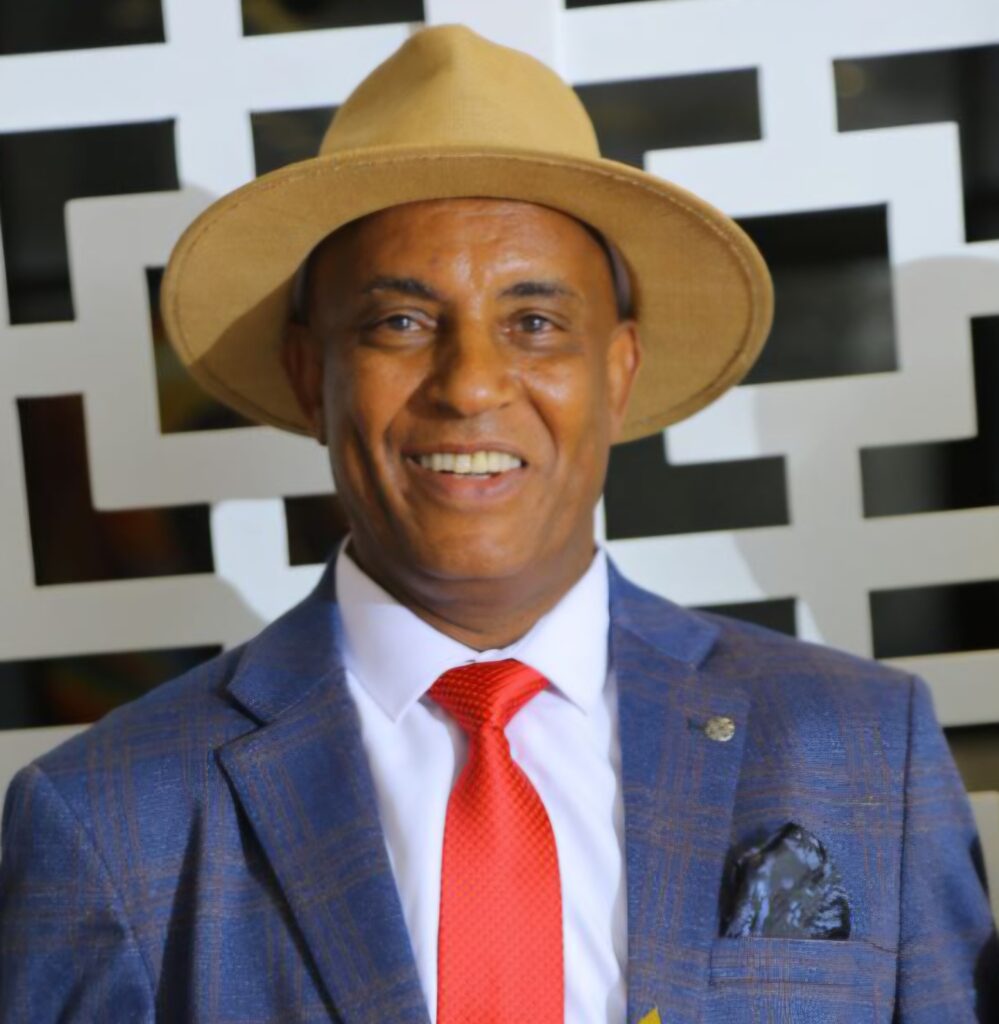
Professor Haileleul Zeleke Woldemariam
Professor Haileleul Zeleke Woldemariam is Professor of Applied Linguistics in NUST’s Department of Communication and Languages, coordinating the PhD programme in Applied Linguistics. Holding a PhD (Punjab University, India), MA in Stylistics (Bangalore University), BA Honours (Addis Ababa University), and other qualifications in teaching, research methodology, and sociology, his research spans forensic linguistics, stylistics, pragmatics, indigenous languages (e.g., !Kung, Sifwe, OluDhimba), and ESP/ELT; he has published 42+ peer-reviewed articles/chapters. He teaches Forensic Linguistics, Stylistics, Research Methods, SLA, Pragmatics and other Linguistics courses. Prior roles include Vice President for Research and Postgraduate Studies (RVU, Ethiopia) and Dean (ASTU). As of October 2023, he is the Editor-in-chief of the Namibian Journal of Linguistics, and Communication Studies. ORCID: 0000-0002-4237-9472.
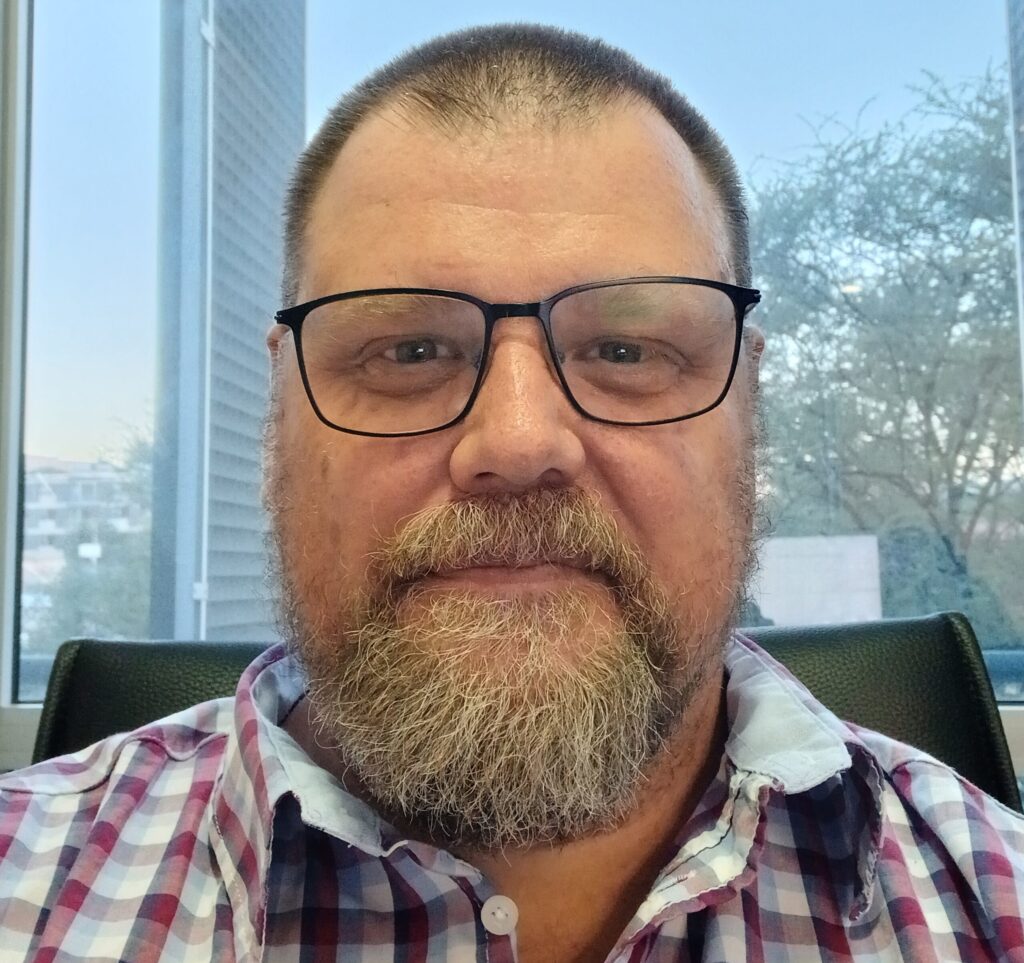
Stephen Visagie
Stephen Visagie is the Digital Scholarship Librarian At the Namibian University of Science & Technology (NUST) Library, based in the capital city of Windhoek. His interests include scholarly publication, especially of open access journals with the multitude of benefits it can offer society.
To provide the best experiences, we use technologies like cookies to store and/or access device information. Consenting to these technologies will allow us to provide you with the best experience on our blog. Not consenting or withdrawing consent, may adversely affect certain features and functions. Check how we store your information by clicking on the Privacy Statement below.
Functional
Immer aktiv
The technical storage or access is strictly necessary for the legitimate purpose of enabling the use of a specific service explicitly requested by the subscriber or user, or for the sole purpose of carrying out the transmission of a communication over an electronic communications network.
Preferences
The technical storage or access is necessary for the legitimate purpose of storing preferences that are not requested by the subscriber or user.
Statistics
The technical storage or access that is used exclusively for statistical purposes.The technical storage or access that is used exclusively for anonymous statistical purposes. Without a subpoena, voluntary compliance on the part of your Internet Service Provider, or additional records from a third party, information stored or retrieved for this purpose alone cannot usually be used to identify you.
Marketing
The technical storage or access is required to create user profiles to send advertising, or to track the user on a website or across several websites for similar marketing purposes.