The story behind the journal: International Social Research Nexus (ISRN)
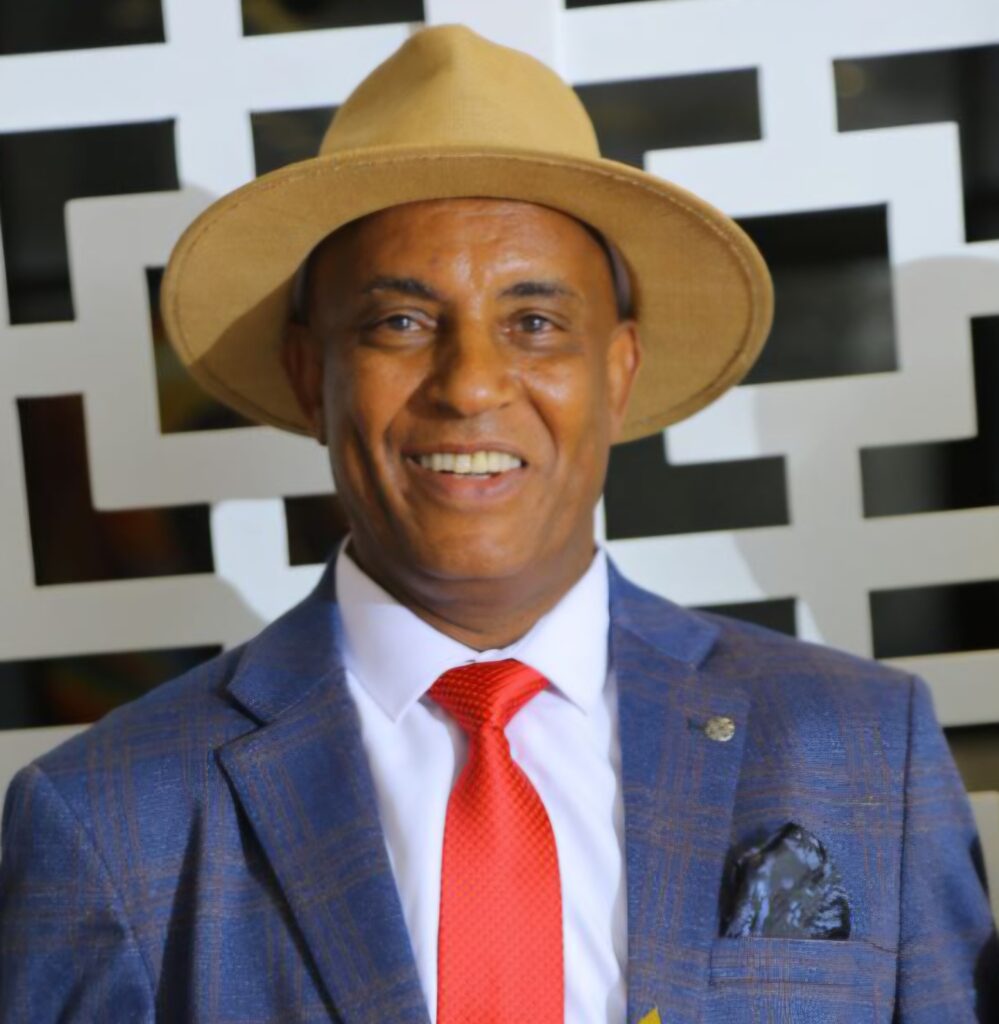
In our latest journal story, we interviewed Md. Shahin Parvez, founder of Scholar Cave and Managing Editor of the International Social Research Nexus (ISRN). Shahin shares the story behind building a social science journal in Bangladesh from the ground up, without institutional backing, and the challenges of establishing credibility as a new open access publication.
Tell us about the journal
It has been a long journey to establish an international social science journal. International Social Research Nexus (ISRN) was founded with a simple but ambitious mission: to provide Bangladesh with a social science journal that meets international standards.
ISRN was formally established in January 2025 — the culmination of an idea that had been taking shape since 2019. The journey from conception to launch was neither easy nor institutionally supported. Every element of the journal’s foundation, from OJS configuration and domain registration to web hosting, was handled by me, without any external funding or collaborative backing. It stands as a product of individual resolve.
In Bangladesh, it carried additional significance: prior to ISRN, no journal from Bangladesh with a purely social science background had achieved DOAJ indexing — making ISRN the first of its kind in the country to reach this distinction.
The early days were not easy. When I reached out to university professors across Bangladesh to introduce the journal, the response was often hesitant. Many doubted both me and the journal. Some were concerned that a newly established journal might be predatory or lack credibility.
That skepticism helped us work to build trust. Professors came to understand the journal’s true intentions, editorial standards, and commitment to quality, and many chose to join the editorial board, lending their expertise and credibility to the journal. Achieving indexing milestones and recognition helped establish it as a credible open access journal with international standards.
Can you tell us more about Scholar Cave?
Scholar Cave is an independent academic publishing organisation established in January 2025. Founded with a commitment to open-access scholarly communication, it currently has five journals in its portfolio — ISRN, launched just two days after Scholar Cave’s founding, serves as the flagship publication, while three further titles remain under active development, spanning areas such as Public Health and Sociology.
Each journal under Scholar Cave is being built with the same ethos that defined ISRN’s founding: rigorous, accessible, and grounded in the realities of the Global South.
How is the journal supported financially?
The journal has article processing charges (APCs). The standard APC is USD $100. However, there are waiver schemes. Authors from low- and middle-income countries may receive a 50% waiver, and South Asian authors can receive a 40% waiver. As a very new journal, we aim to keep costs low. We are not interested in charging high publication fees. Instead, we are focused on developing and establishing a credible journal.
Although the journal is still young, can you already see it making a difference?
A significant number of social research enthusiasts and professional researchers who had previously published papers in international journals approached us. Most of them were frustrated with the navigation process and high APC journals. As we are strongly committed to ensuring the international standards as a publisher, social researchers from different backgrounds have recognised our existence. We organised our first conference (1st International Social Research Nexus Conference -2025) which created some attention for the journal. Most of our submissions come from younger scholars and university students. We also receive submissions from university academics, but the proportion is relatively low.
How do you find peer reviewers and editorial board members?
In the early days, approaching editors was genuinely challenging. I started by personally inviting professors from public universities across Bangladesh, but the initial response was quite low — many were understandably cautious. A handful of people I already knew professionally were the first to accept, and that small group gave the journal its initial credibility. Our Editor-in-Chief has been extremely helpful and has played an important role in identifying reviewers and editorial board members. We also have section editors in areas such as social justice, public health, and political science.
What’s the workload like for you?
My university responsibilities generally occupy my weekdays. After that, I spend my time working on the journal. I feel a very personal connection to ISRN because I founded it.
At the production stage, once an article has been accepted, I work with a small team of editorial assistants who support the formatting and preparation of manuscripts for publication. These assistants have hands-on experience with document formatting in Microsoft Word and LaTeX. I deliberately recruit early-career university students. It gives them valuable practical experience in academic publishing, and at the same time it means the journal plays a small but genuine role in developing the next generation of scholarly professionals in Bangladesh.
What are your thoughts on open access and open science?
Before becoming a Managing Editor, I was a researcher. As researchers, we need access to published studies and literature reviews. I strongly believe that knowledge should not be locked behind paywalls. Open access ensures that research is available not only to academics but also to policymakers, students, and communities who can use it. I believe open access is one of the most important components of a trustworthy research ecosystem.
What motivated you to have the journal indexed in DOAJ? DOAJ is one of the most widely recognised and respected indexes for open-access journals worldwide. As a new journal, we are constantly working to improve. DOAJ represents an important milestone because it demonstrates that a journal meets recognised standards for openness, ethics, and quality.
For authors, seeing that a journal is indexed in DOAJ builds confidence. It shows that the journal’s policies, peer-review processes, and publishing standards are transparent and trustworthy. That credibility was one of my main motivations for seeking DOAJ indexing.
When you applied to DOAJ, did you receive support or advice from anyone?
Initially, I applied and was unsuccessful and I had to wait six months before applying again. I followed DOAJ’s guidance and resources closely and made the necessary changes. I did not receive any formal guidance from librarians or academic colleagues during this process. My primary reference throughout was DOAJ’s own published guidelines, which I followed very carefully. Beyond that, I spent a considerable amount of time studying journals that had already been successfully indexed in DOAJ, looking closely at how they had structured their editorial policies, peer review processes, and website transparency.
I also found many of the resources through DOAJ’s LinkedIn and other social media platforms. I tried to participate in and learn from every available session.
What do you think DOAJ could do in the future to help young journals like yours? In Bangladesh, DOAJ serves as an important signal of credibility and helps distinguish trustworthy journals from predatory ones. I think DOAJ could provide even greater visibility and support, especially for independent journals in their early stages. Mentorship programs, regional outreach activities, and highlighting successful journal stories would all be very valuable.
Being indexed by DOAJ changed the trajectory of ISRN and is an important milestone for social science publishing in Bangladesh. I hope that DOAJ and similar organisations will continue to help increase the journal’s visibility. Greater recognition helps attract more readers, authors, and contributors, which ultimately strengthens the journal and supports its mission.
Md. Shahin Parvez is a Lecturer in the Department of Sociology at First Capital University of Bangladesh, Chuadanga, where he has been serving since March 2023. He holds a Master of Social Sciences (M.S.S) and a Bachelor of Social Sciences (B.S.S Honours) in Sociology from Gopalganj Science and Technology University, Bangladesh, with strong academic records. His academic research spans Environmental Sociology, Climate Migration, Gender Studies, Suicide, and Public Health. Beyond teaching and research, Md. Shahin Parvez is the Founder of Scholar Cave, an International Research and Academic Publisher, and serves as the Managing Editor of the International Social Research Nexus (ISRN). He has previously served as a Remote Research Assistant at the Crawford School of Public Policy, Australian National University.
To provide the best experiences, we use technologies like cookies to store and/or access device information. Consenting to these technologies will allow us to provide you with the best experience on our blog. Not consenting or withdrawing consent, may adversely affect certain features and functions. Check how we store your information by clicking on the Privacy Statement below.
Functional
Always active
The technical storage or access is strictly necessary for the legitimate purpose of enabling the use of a specific service explicitly requested by the subscriber or user, or for the sole purpose of carrying out the transmission of a communication over an electronic communications network.
Preferences
The technical storage or access is necessary for the legitimate purpose of storing preferences that are not requested by the subscriber or user.
Statistics
The technical storage or access that is used exclusively for statistical purposes.The technical storage or access that is used exclusively for anonymous statistical purposes. Without a subpoena, voluntary compliance on the part of your Internet Service Provider, or additional records from a third party, information stored or retrieved for this purpose alone cannot usually be used to identify you.
Marketing
The technical storage or access is required to create user profiles to send advertising, or to track the user on a website or across several websites for similar marketing purposes.