During June 2026, DOAJ celebrates ten years of the Ambassador Programme. In this very special post, DOAJ Managing Editor & Ambassador for the MENA region Kamel Belhamel reflects on his DOAJ journey.
It is hard to believe that a full decade has passed since I first stepped into my role with the Directory of Open Access Journals (DOAJ). Looking back at where we started, the landscape of scholarly publishing in the Middle East and North Africa (MENA) region looked vastly different. Today, as I mark my 10th anniversary serving as both a DOAJ Ambassador and a Managing Editor, I am filled with immense pride for how far our regional research community has come and a sharp clarity about the work that still lies ahead.
Mapping the MENA landscape: Moving beyond the margins
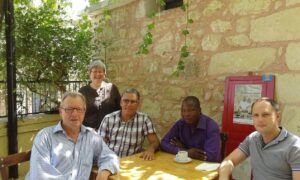
When the DOAJ Ambassador Programme officially took flight, our mission was clear yet daunting: bridge the gap between global indexing standards and local publishing realities. For too long, high-quality research coming out of the MENA region struggled for global visibility due to language barriers, limited institutional funding, or a lack of awareness regarding open access best practices.
Over the past ten years, my role as an Ambassador has been about building trust, breaking down silos, and advocating for models that truly fit our region.
From advocacy to action: The view from the editorial desk
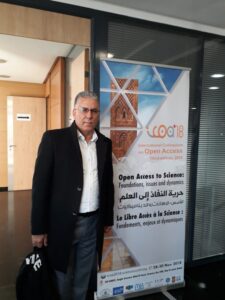
Given the financial constraints that researchers across our region face, traditional Article Processing Charges (APCs) present a massive hurdle, which is why advocating for Diamond open access, where publication is entirely free to both read and publish, has become the cornerstone of my advocacy. This commitment has gone hand in hand with empowering local publishers: from Cairo to Algiers, and from Baghdad to Rabat, I have had the privilege of running workshops, training editorial boards, and helping local journals align with global transparency principles.
While being an Ambassador allows me to champion the philosophy of open access, my role as a Managing Editor is where the rubber meets the road. Evaluating journal applications is a meticulous, deeply responsible task.
Open access isn’t just about making research free; it’s about making sure that free research is rigorous, ethical, and built to last.
Every week brings a new wave of applications. My dual perspective allows me to view these applications not just through a rigid checklist, but with a deep understanding of regional context. Over the last decade, our work has involved upholding rigorous standards by sifting through complex setups, ensuring robust peer review practices among journals, and guaranteeing adherence to licensing and copyright policies. At the same time, we have been combatting predatory practices in order to protect our scholars from questionable publishers who attempt to exploit the open access model.
If a journal doesn’t initially meet DOAJ criteria, we provide detailed feedback to guide them to resubmit. Therefore, the work doesn’t end with a rejection, but an encouragement and guidance on how to successfully reapply.
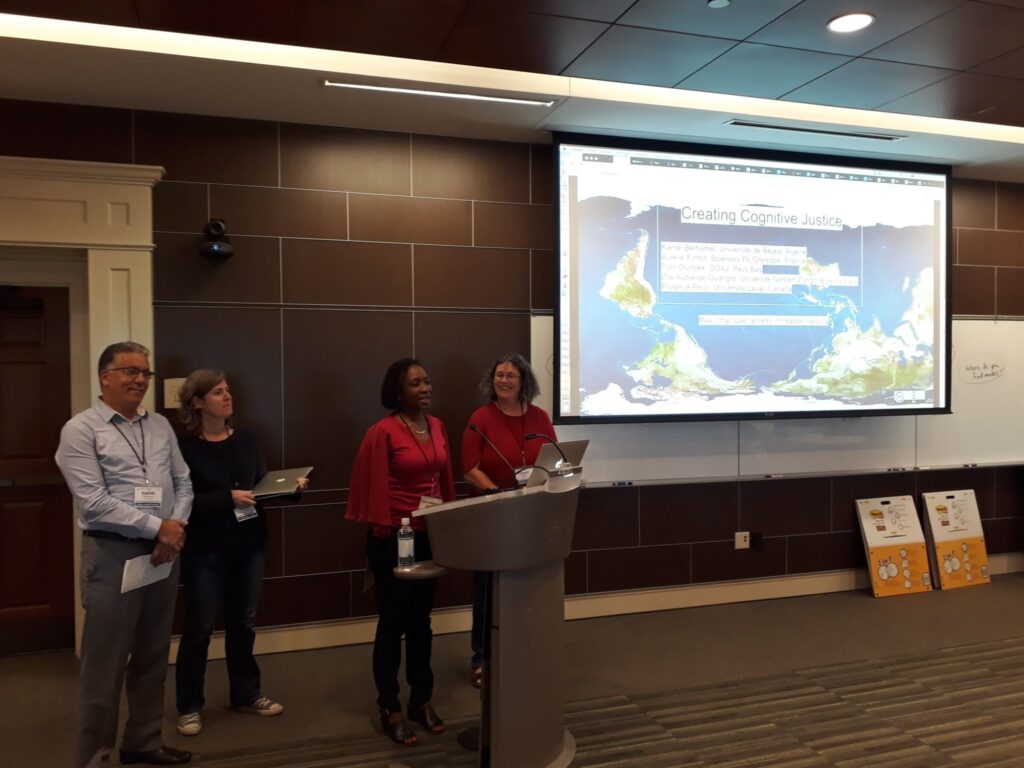
One of the important projects that I participated in was Creating Global Cognitive Justice, which was initiated at the 2018 Triangle Scholarly Communication Institute at Duke University Libraries in North Carolina. The project explored the language, access and epistemological barriers that jeopardise the equity, diversity and inclusivity of open access (OA) scholarly communication in the Francophone Global South. We recognised that the dominance of English and Northern-centric evaluation systems, such as the Impact Factor, perpetuate a form of ‘cognitive injustice.’ Our team promoted epistemic diversity by advocating multilingual publishing, supporting the production of locally relevant knowledge, and proposing alternative, equitable quality criteria for research assessment.
Looking ahead to the next decade
This milestone isn’t just a finish line; it’s a launching pad. The global scholarly community is shifting rapidly, and the MENA region’s insights are more vital than ever. We need deeper institutional backing, sustainable funding for Diamond open access infrastructures, and a continued dedication to keeping research equitable.
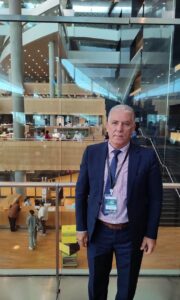
To the entire DOAJ team, the fellow Ambassadors across the globe who keep the flame of open science burning: thank you for an incredible 10 years.
I did not do this alone. Thank you to the DOAJ team for trusting a local voice to represent the region.
As I enter my 11th year, my goal remains the same:
Democratize knowledge, but never dilute quality.